
+86- 15030729981
www.zeushebei.com
www.zeushebei.com
Economic Development Zone, Cang City, Hebei Province, China.

Views: 0 Author: Site Editor Publish Time: 2026-02-13 Origin: Site
Choose strong materials like steel for your poultry house. Steel lasts longer and resists damage from storms.
Select a safe location for your chicken house. Avoid open fields and position it near trees or hills to block strong winds.
Regularly inspect your poultry house for loose panels and leaks. Monthly checks help you fix problems before typhoons hit.
Use a low gable roof with a gentle slope. This design helps wind pass over easily and allows rainwater to drain quickly.
Prepare your house before typhoon season. Make a plan for inspections, repairs, and upgrades to keep your chickens safe.
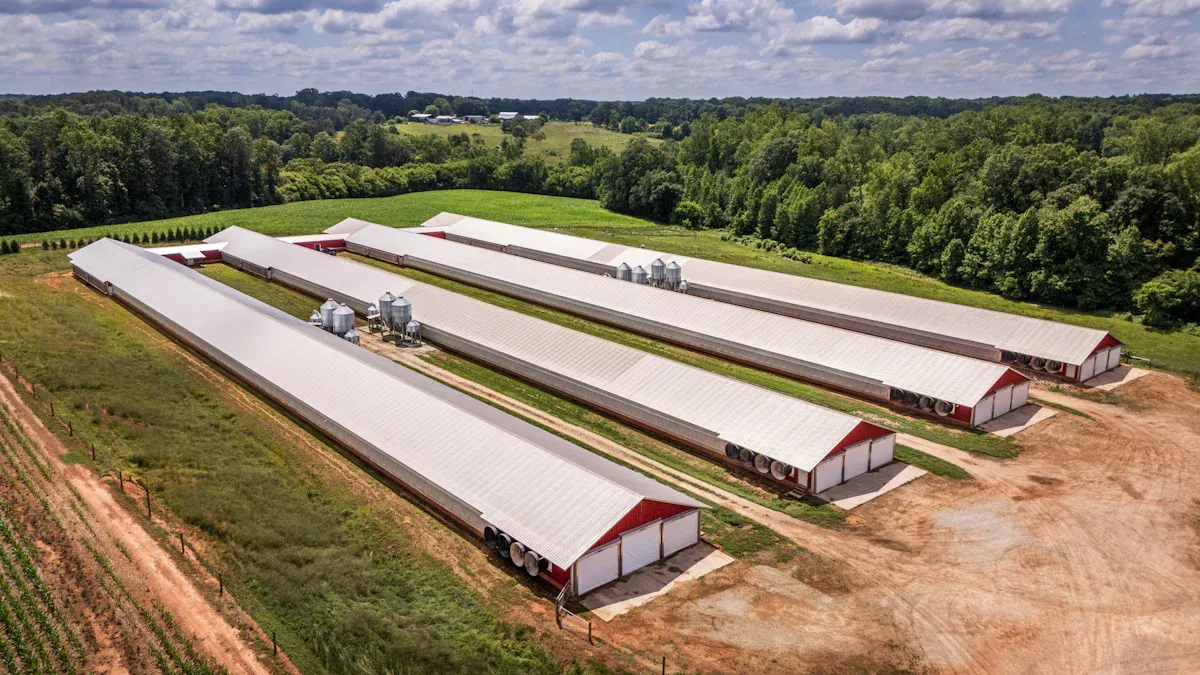
Your chicken house must be strong during typhoons. Steel frames help make the house sturdy. Bracing gives more support, so it does not shake or fall. Anchoring keeps the house on the ground in bad weather. Prefabricated components let you build fast and fit parts together well. These things make your house safer and stronger.
Feature | Description | Effectiveness in Typhoons |
|---|---|---|
Prefabricated Components | All parts made in a factory and put together at your farm. | Makes building faster and keeps the house steady. |
Strong Wind Resistance | Built to stand up to strong winds and shaking. | Stops the house from falling in storms. |
Lightweight Structure | Less chance of getting hurt if the house falls. | Keeps people safer during typhoons. |
You should follow local building codes and wind rules. These rules help you make a strong house. They protect your chickens and your money.
Pick a spot for your house that is not in an open field. High winds hit open places hard. Put your house near trees or hills to block wind. Turn the house so the narrow end faces the wind. This helps the walls and roof stay safe. Good site choice and house direction are important for strong houses.
Tip: Ask people nearby about the safest place for your house. They know where typhoons have gone before.
Typhoons often bring floods. Build your house higher than the ground to keep water out. Put it on a slope so water runs away. Use sandbags and ditches for extra safety. These ideas help keep your chickens safe in storms.
You can make a house that stays strong in wind and floods. These steps help you worry less and keep your chickens safe.

You need tough materials for your poultry house. Steel frames are stronger than wood. They last longer because pests cannot eat them. Steel does not rot like wood. You spend less money fixing steel frames. You can change steel frames to handle strong winds. Bracing gives extra support. It helps your house stay strong in a typhoon.
Feature | Steel Frames | Traditional Materials |
|---|---|---|
Strength | Greater strength and load-bearing capacity | Lower strength and capacity |
Longevity | Resistant to rot, pests, and moisture | Prone to decay and damage |
Maintenance Costs | Lower maintenance costs | Higher maintenance costs |
Customization for Wind Load | Can be customized for specific wind loads | Limited customization options |
Tie-down straps help keep your house safe. They hold your house to the ground when winds blow hard.
Roofing materials matter during typhoons. A gable roof with one ridge works best. This roof shape has fewer places for water to leak. Both sides slope so rain drains fast. Clay tiles stay in place with concrete strap beams. Cement mortar screed and chicken mesh add more strength. These help in areas where wind pulls hard.
Plywood and OSB make your roof strong and help keep heat in.
Galvanized-steel netting stops flying debris from breaking your roof.
Cedar-fencing planks last a long time and help with insulation.
Good roofing keeps your chickens comfortable in hot and cold weather.
You need the right fasteners for your house. Screws hold things together better than nails. Screws do not come out easily when wind blows. Use screws for roofing, bracing, and siding. Screws make your house stronger and help with insulation. Make sure all screws are tight before typhoon season.
Tip: Always check fasteners before typhoons. This keeps your house safe and insulation working.
You need to pay attention to roof shape and slope when planning chicken house design. The right roof shape helps your housing stand up to high winds. Low roofs offer better protection because they do not catch as much wind. You can use a gable roof with a gentle slope to let rainwater drain quickly. This shape keeps water from pooling and helps with insulation.
Roof Depth (feet) | Maximum Roof Height (feet) |
|---|---|
8 | 5 |
10 | 6.25 |
12 | 7 |
Low houses around 4 feet high resist wind well. If you build a roof about 6 feet high, you must stake it down for stability. Many farmers learned that low-house designs work best after seeing taller shelters fail during storms. You should keep your housing low to the ground. This reduces the risk from extreme weather and makes your shelter safer.
Tip: Use windbreaks like trees or fences to block high winds. These features help your housing last longer.
Anchoring your housing is a key step in chicken house design. You must use strong foundations to keep your shelter steady. Auger anchors and hurricane straps hold your housing firmly in place. Cross-bracing and reinforced joints add strength to the structure. Galvanized steel frames can withstand wind loads up to 200 km/h. This makes your housing durable in typhoon-prone areas.
You can add sandbags around the base for extra protection against floods. Sandbags keep water away and help with insulation. You should build your shelter on a slight slope. This lets water drain and keeps your housing dry. These design considerations make your shelters last longer and protect your flock.
Note: Regularly check your foundation for cracks or loose anchors. Fix problems early to keep your housing safe.
You must secure all openings in your housing before storms. Latch, lock, or screw doors and windows closed. Use plywood or other strong materials to cover openings and protect them from flying debris. Seal gaps to stop water and wind from entering your shelter. You should assess your housing during the rainy season and fill any gaps you find.
Proper ventilation in summer is important for chicken health. You need to balance insulation and airflow. Place vents high on the walls to let hot air escape. Use mesh screens to keep debris out while letting air in. Make sure your shelter protects birds from sideways rain. Good ventilation keeps your housing comfortable and prevents heat buildup.
Tip: Check vents and openings often. Clean them to keep insulation working and maintain airflow.
You can build durable housing by following these steps. Reinforced structure designs, strong anchoring, and secure openings help your shelter resist high winds and extreme weather. These features improve insulation and keep your chickens safe.
You can save money by using materials from your area. Bamboo, coconut lumber, and old metal are good for building. These things help you make strong shelters for your chickens. People in your town know how to build these houses. They also know about the weather and which insulation works best. When you use local workers and materials, you help your neighbors too.
Tip: Talk to other farmers about what materials work best. They can give you tips about insulation and building strong shelters.
You can make your chicken house better with modular upgrades. Start with a simple machine-portable house. Add more insulation as you get more chickens. Modular designs let you make your shelter bigger without starting over. You can put in new panels, vents, or doors on your chicken coops. These upgrades keep your chickens safe and comfortable. Modular upgrades also help with insulation and airflow.
Upgrade Type | Benefit for Housing | Cost Savings |
|---|---|---|
Extra Insulation | Keeps shelter warm or cool | Low |
Portable Panels | Easy to move and replace | Medium |
Ventilation Screens | Improves airflow | Low |
You need to pick the most important upgrades first. Start with insulation because it keeps chickens safe and helps them grow. Then, look at the roof and walls for leaks or weak spots. Fix these problems to make your house stronger. Upgrade your machine-portable house before typhoon season comes. This way, your shelter will be ready for storms and your chickens will be safe. Plan your upgrades based on how much money you have and what you need most.
Note: Good insulation and a strong house make your shelter last longer. You protect your chickens and make your poultry house better for your flock.
You should check your chicken house often to keep chickens safe. Walk around your machine-portable housing and look for loose panels or broken fasteners. Also, check for gaps where wind can get in. Write down what you find in a logbook. This helps you see problems early and keeps your range poultry housing strong. Regular checks help you find leaks or weak spots before storms come. Keeping your pastured poultry housing in good shape protects your money and helps your chickens grow better.
Tip: Clean your housing after each flock leaves. This lowers the chance of disease and keeps your chickens healthy.
Benefit | Description |
|---|---|
Extended Lifespan | Regular care can make poultry houses last up to 30% longer. |
Improved Biosecurity | Cleaning and checking often lowers the risk of disease. |
Enhanced Productivity | Good waste systems help chickens grow and stop pests. |
You need to fix small problems right away. Tighten screws, change broken panels, and patch holes in your machine-portable housing. Use strong materials that can handle wind and rain. Keep extra parts ready so you can fix your pastured chicken house fast. Fixing things quickly stops small problems from getting worse. This keeps your free-range flock safe and your chickens growing well.
Note: Do big repairs between flocks. This keeps your chickens safe from disease.
You must get ready before typhoons come. Make a plan for your free-range and pastured poultry. Get your housing ready for strong wind and heavy rain. Here are some steps you can follow:
Make a farm plan that includes regular checks for all equipment.
Restock extra parts for quick fixes.
Keep a logbook for checks and repairs.
Finish big repairs between flocks to lower disease risk.
Test generators every month to make sure you have power.
Check water systems to stop damage.
Check and seal the perimeter inlet system to block wind.
Write an emergency plan for bad weather.
When you do these things, your chickens on range will be safer. Your housing will last longer, and your poultry production will stay strong even during storms.
You can learn from other Filipino farmers who built strong shelter for their chickens. Many farmers in Bicol and Eastern Visayas faced strong storms. They used machine-portable housing to protect their free-range flocks. One farmer in Leyte shared that his shelter stayed in place during Typhoon Ursula. He used steel frames and added sandbags around the base. His free-range chickens stayed safe and dry. Another farmer in Samar built his shelter on a slope. He used bamboo and local materials for his housing. He said his pastured poultry survived heavy rain and wind because he checked his shelter before the storm.
“I always check my housing before typhoon season. I fix leaks and tighten screws. My free-range chickens stay safe because I prepare early,” says a farmer from Albay.
You can see that strong shelter and regular checks help you keep your production steady. These stories show that you can protect your chickens with the right steps.
You can use these lessons to improve your own range poultry housing. Farmers say that you should not wait until the last minute. You need to check your machine-portable housing often. You should fix small problems before they get worse. Many farmers found that low shelters work best for free-range and pastured chickens. You can use local materials to save money and build strong housing. Farmers also learned that good shelter helps keep production high after storms.
Here are some tips from experienced farmers:
Check your shelter every month.
Use sandbags and strong anchors for your housing.
Choose low, sturdy shelters for your free-range flock.
Keep extra parts ready for repairs.
Work with your neighbors to share ideas.
You can keep your pastured poultry safe and your production strong if you follow these lessons.
You can make chicken houses that stand up to typhoons by doing these things:
Step | Description |
|---|---|
1 | Pick steel structures because they last long and handle typhoons. |
2 | Follow the country’s building rules and safety laws. |
3 | Check if your building can take winds up to 275 km/h. |
4 | Use a professional design so air moves well inside. |
5 | Steel is better than old materials because it saves time and gives more space. |
A strong plan, good materials, and checking often keep your chickens safe. Start now and talk to local experts if you need help. You can protect your poultry and your money.
You should use a low gable roof with a gentle slope. This shape lets wind pass over easily and helps rainwater drain fast. Low roofs work best in strong storms.
Check your poultry house every month. Look for loose panels, leaks, or weak spots. Write down your findings in a logbook. Regular checks help you fix problems before storms arrive.
Yes, you can use bamboo. Bamboo is strong and flexible. Combine it with steel frames for better support. Always treat bamboo to prevent rot and pests.
Tip: Start with these upgrades for the best protection:
Add sandbags around the base.
Tighten all screws and fasteners.
Seal gaps in walls and roof.
Check anchors and bracing.
You should install high wall vents with mesh screens. These let hot air escape and block debris. Good airflow keeps chickens comfortable and healthy, even in bad weather.


