
+86- 15030729981
www.zeushebei.com
www.zeushebei.com
Economic Development Zone, Cang City, Hebei Province, China.

Views: 0 Author: Site Editor Publish Time: 2026-02-13 Origin: Site
Picking the right layer chicken cage helps your poultry house do well. If you choose a cage that fits your flock size and how you manage, you keep birds safe and work better. Research shows the right cage can make your farm 12–18% more productive. It can also help each hen lay more eggs, from 287 to 326 each year. You need to think about what you need now and what you want later. This helps you get the best value for your poultry and chicken business.
First, know how many chickens you have and how big your poultry house is. This helps you pick the right cage. Your chickens will be more comfortable and healthy.
Think about how you want to farm and manage your chickens. Some systems, like free-range or cage-free, need different cages. These choices also affect how happy and healthy your birds are.
Make sure you know what you want to achieve. Pick cages that are not too expensive and are easy to clean. The cages should also keep your chickens healthy. This will help you get more eggs.
Choose what your cages are made of carefully. Strong materials like stainless steel last a long time. They also help you spend less money fixing cages later.
Make sure your cage has good airflow and waste control. This helps your chickens stay healthy. It also makes your eggs better.
Start by knowing how many chickens you want to keep on your poultry farm. The number of birds will help you decide the size and type of cage you need. If you run a backyard flock, you may only need a small setup. Commercial poultry farms often require larger cages with special features, such as sloped floors for easy egg collection. You should also measure your poultry house. Make sure the cages fit well and leave enough space for air to move. A good fit helps your chickens stay healthy and makes your work easier.
Tip: Always match the cage size to both your flock size and the space in your poultry house. This helps prevent crowding and keeps your chickens comfortable.
Think about your farming model before you choose a cage. Some poultry farmers use free-range systems, while others use intensive or cage-free models. Each style affects your cage choice:
Free-range systems let chickens move and act naturally, which is good for their welfare. These systems need shelters and extra care to keep birds safe from disease.
Cage-free models help chickens stay healthy and strong. Hens in these systems can walk, stretch, and lay eggs more easily.
Conventional cages limit movement and can cause health problems, such as weak bones.
Your management style also matters. If you want to rotate your flock on pasture, you may need mobile cages. If you prefer simple care, fixed cages may work better.
Set clear goals for your poultry farm. Many poultry farmers want to keep costs low and make egg collection easy. A-type chicken cages are popular because they cost less and are simple to use. If you want to focus on bird welfare and high egg production, you may choose cage-free systems. You should also think about how much time you want to spend on daily care. Some cages have features that save time and make work easier. Balancing cost, bird health, and your own needs will help you pick the best chicken cage for your poultry farm.

Picking the right layer chicken cage helps your poultry house do well. Each cage system supports your birds in different ways. You must match the cage to your farm size, how you manage, and your goals. Here are the main types of cages and how they fit different farms.
You can pick traditional coops or modern laying hen cages. Traditional coops give chickens more room to move and act naturally. Modern cages, like battery and stepped layer chicken cage systems, focus on control and efficiency. The table below shows how each housing system affects bird welfare and productivity:
Housing System | Welfare Impacts | Productivity Impacts |
|---|---|---|
Conventional Cages | Birds cannot move much; fewer infections and deaths. | Less fighting for food and water; group size is controlled. |
Furnished Cages | More activities for hens; still not fully natural. | Better bone strength and lower death rates than conventional cages. |
Loose Housing | Chickens can do more things; more fighting; feelings change. | More broken bones; hard to control the environment. |
Aviary Housing | Best bone strength; more broken bones; more natural living. | Medium ammonia and dust; less fighting than loose housing. |
Free Range | Chickens act naturally; feel good; more deaths. | More infections and predators; bad control in bad weather. |
Modern chicken layer cages, like multi-layer chicken cages, help you manage big flocks. These cages keep layers safe from predators and disease. You can collect eggs easily and keep feed and water clean. Traditional coops work well for small flocks and let chickens scratch and peck. But you may see more injuries and spend more on feed.
Note: Modern laying hen cages make egg collection easier and reduce work, but you need to think about bird welfare too.
Mobile tractors and walk-in cages give you flexible choices for your poultry farm. Mobile tractors let you move chickens to fresh grass. This system gives birds a better diet and helps control weeds. Moving the cage often also helps soil health. Walk-in cages are best for bigger flocks. You can walk inside to feed chickens and collect eggs. These cages stay in one place, so chickens eat the same feed every day.
Mobile tractors let chickens eat fresh plants, which helps their health and egg production.
You can move mobile coops around your land, which helps control weeds and adds natural fertilizer.
Walk-in cages make it easier to care for large flocks, but chickens do not get different diets or move around.
If you want to rotate your flock and improve your land, mobile tractors are a good choice. If you need to manage many layers in one spot, walk-in cages save time and work.
Deep litter systems use thick bedding on the floor of your poultry house. You add new bedding when needed. This system keeps your flock healthy and lowers your daily work. Deep litter helps stop germs and keeps away parasites like lice and mites. It also protects chickens from coccidiosis, a common disease.
Deep litter systems make the environment healthier for your flock.
You spend less time cleaning.
This system helps stop disease and keeps parasites away.
To get the best results, make sure your coop has good air flow. Pick the right flooring and avoid strong drafts above the roosts.
You must match cage types to your farm size. The table below shows which layer chicken cage fits different farms:
Cage Type | Suitable Scale | Key Features |
|---|---|---|
A-type | Small to Medium Farms | Costs less, easy to set up and care for |
H-type | Large-Scale Farms | Multi-level design, automatic systems for feeding, watering, egg collection, and manure removal |
A type chicken cages work well for small and medium farms. You can set them up and care for them easily. H type chicken cages fit big commercial farms. These cages use automatic systems to feed, water, and collect eggs. You save time and work with these advanced systems.
Tip: Always pick the layer chicken cage that matches your farm size and how you manage. This helps you get the best results for your poultry business.
You have many choices for chicken cage systems. Think about your flock size, your goals, and your daily routine. The right laying hen cages will help your chickens stay healthy and lay more eggs.
Each layer needs enough space in the chicken cage. Space per bird changes how many eggs hens lay. It also affects their health. Hens with more room act better and lose fewer feathers. If space is tight, hens may lay bigger eggs. But they can get scared and feel bad. More space lets layers stretch, eat, and drink easily. You make cages comfy by using the right layer chicken cage size. This helps hens feel better and can help them lay more eggs.
Tip: Always look for crowding in your system. More space gives you healthier chickens and better eggs.
Good materials help your chicken cage last longer and stay clean. You have a few choices:
Material | Advantages | Disadvantages |
|---|---|---|
Galvanized Wire | Cheap, light, good for short use | Rusts faster, does not last as long |
Hot-Dip Galvanized Wire | Strong against rust, lasts longer, stronger build | Costs more, heavier |
Stainless Steel | Very strong, easy to clean, stays clean | Costs a lot, heavy |
Pick the material that fits your needs best. Stainless steel is the strongest and cleanest. Hot-dip galvanized wire is tough and lasts a long time. Galvanized wire is fine for short projects.
Automated chicken cages use special systems to feed layers and do chores. These systems give the right amount of feed and waste less. Farms with these systems work up to 30% better. You can set and check feeding times from far away. Automated systems feed, clean, and collect eggs for you. This means less work and better care.
Automated systems save time and money.
You use feed well and keep layers healthy.
Good air flow is very important for your layer chicken cage. You need a system to keep air fresh and cool. Ventilation lowers bad gases like ammonia and carbon dioxide. Good waste management keeps the area clean and stops bad smells. You protect layers from sickness in the air and make a better place for chickens.
Good air flow keeps layers healthy.
Waste management stops disease and makes chickens comfortable.
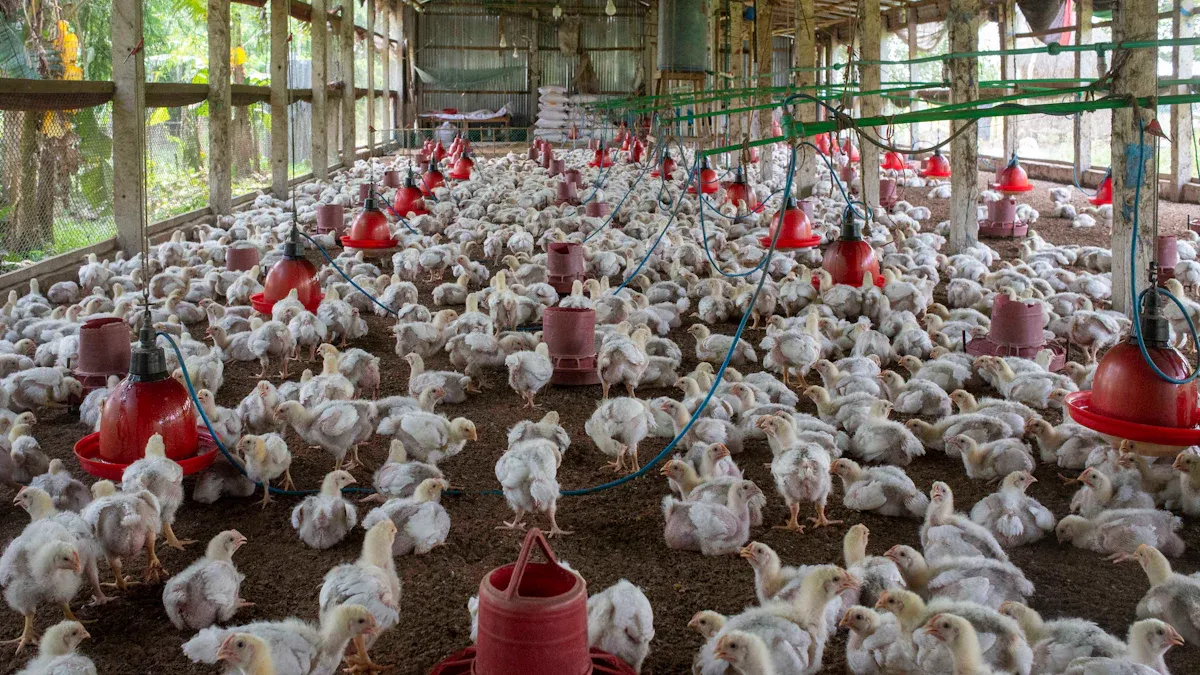
How your layer chicken cage is built matters a lot. Cages with gentle slopes help eggs roll into trays safely. This keeps eggs from breaking and makes them cleaner. You can see how this helps in the table below:
Benefit | Impact on Egg Collection Efficiency |
|---|---|
Comfortable environment | Helps hens lay eggs regularly |
Gentle slope cage designs | Stops eggs from breaking by rolling them into trays |
Better hygiene and ventilation | Keeps diseases away and helps hens lay more eggs |
Automated egg collection systems are useful too. These systems move eggs fast and make fewer mistakes. You spend less time picking up eggs and lose fewer to cracks. Automatic laying hen cages can help you collect eggs faster and get more done.
You want your hens to be healthy and happy. Good chicken cage design lets hens act naturally. When you add perches, sand, and litter, hens can peck, scratch, and dust-bathe. These things help hens feel less stress and stop feather pecking. You can use raised platforms and aviaries. These features help hens build strong muscles and feel safer.
Environmental enrichments help hens feel better.
Outdoor access lets hens act naturally and feel less stress.
Giving enough space helps hens use all parts of the cage.
Modern chicken cage designs often have smart climate control. This keeps air fresh and the temperature right. It helps hens lay more eggs and stay healthy.
A good cage makes cleaning and disease control easier. Some cages have automated cleaning systems. These systems remove manure and lower ammonia levels. This keeps hens breathing well and the chicken house fresh. Smart sensors can check hen health and find problems early.
Automated cleaning saves work and lowers disease risk.
Good waste management keeps hens comfortable and productive.
When you pick the right cage, you help your farm do better. You also keep your hens healthy and happy.
You need to think about the price of a layer chicken cage. It is important to look at how much it costs now and how much it helps later. Many farmers check both price and quality before buying. High-quality cages cost more at first. But they help you save money over time. These cages help hens lay more eggs and need less fixing. The material, like steel, changes the price. Special features can make cages cost more. But these features often help your farm do better. Farmers sometimes find it hard to pick between price and quality. You want your cage to give you more eggs and fewer repairs.
Tip: Think about what you pay now and what you save later. A good cage helps you get more eggs and do less work.
Here is a table that shows the average price for a chicken battery cage in big poultry farms:
Item | Cost (USD) |
|---|---|
chicken battery cage | 3872 |
You must take care of your layer chicken cage often. Cleaning the cage helps keep manure away and stops sickness. Washing the cage keeps hens healthy and helps them live longer. Checking the cage often helps you find problems early. Fixing things right away stops bigger issues. This keeps your chicken house working well.
Cleaning often stops disease and makes cages last longer.
Checking cages helps you fix problems before they get worse.
Fixing things quickly keeps hens safe and stops big repairs.
You should check if the supplier is trustworthy before you buy a chicken cage. Look for warranties and see how fast they answer your questions. Read reviews from other people to learn about their service. Clear instructions and all parts make setup easier. Make sure the cage follows local rules and fits your farm. Good suppliers help you get the best results and support you after you buy.
Note: A trusted supplier helps you feel safe and keeps your hens laying eggs.
When you choose a layer chicken cage, match its features to your farm’s needs. Give each chicken enough space, use strong materials, and focus on good ventilation. This helps your layer flock stay healthy and boosts egg production. You improve egg quality, reduce labor, and support long-term value. Talk with trusted suppliers for the best chicken cage design and after-sales help. Custom options can make your poultry house more efficient and keep your layer hens laying more eggs.
You should give each layer at least 450–550 cm² of space. This helps your hens move, eat, and lay eggs comfortably. Check your flock size and match the cage size to your poultry house.
You should clean your cages every week. Remove manure and old bedding. This keeps your chickens healthy and reduces the risk of disease.
Yes, you can use a layer chicken cage on any farm. Small farms often use A-type cages. Large farms use H-type cages with automatic systems. Choose the right type for your farm size.
Stainless steel lasts the longest. Hot-dip galvanized wire also works well and resists rust. Pick strong materials to save money on repairs.
Use fans or open windows for better airflow. Give your chickens fresh water often. Good ventilation helps prevent heat stress and keeps your flock healthy.


