
+86- 15030729981
www.zeushebei.com
www.zeushebei.com
Economic Development Zone, Cang City, Hebei Province, China.

Views: 126 Author: Site Editor Publish Time: 2026-04-24 Origin: Site
You can make more money from your farm with an automatic layer chicken cage system. Many farmers in South Africa now pick smart features like IoT and solar. These features help save money and get better results. The right system helps you work faster and care for your chickens. It also helps you get more eggs. Studies show that automation can help you do more work and spend less money in three to five years:
ROI Timeline | Impact of Automation |
|---|---|
3-5 years | Big increase in how much you produce and lower costs |
Buying an automatic layer chicken cage system can help you get more eggs and spend less money in 3 to 5 years.
You need to know your farm's size and what you want to produce. This helps you pick the best cage system for your farm.
Picking a system that follows new poultry laws in 2026 keeps your chickens safe and helps you avoid fines.
Automation features like IoT and solar power make your farm work better. They also lower worker costs and help you manage your farm.
If you check and take care of your system often, you can get more money back and keep your chickens healthy and laying eggs.
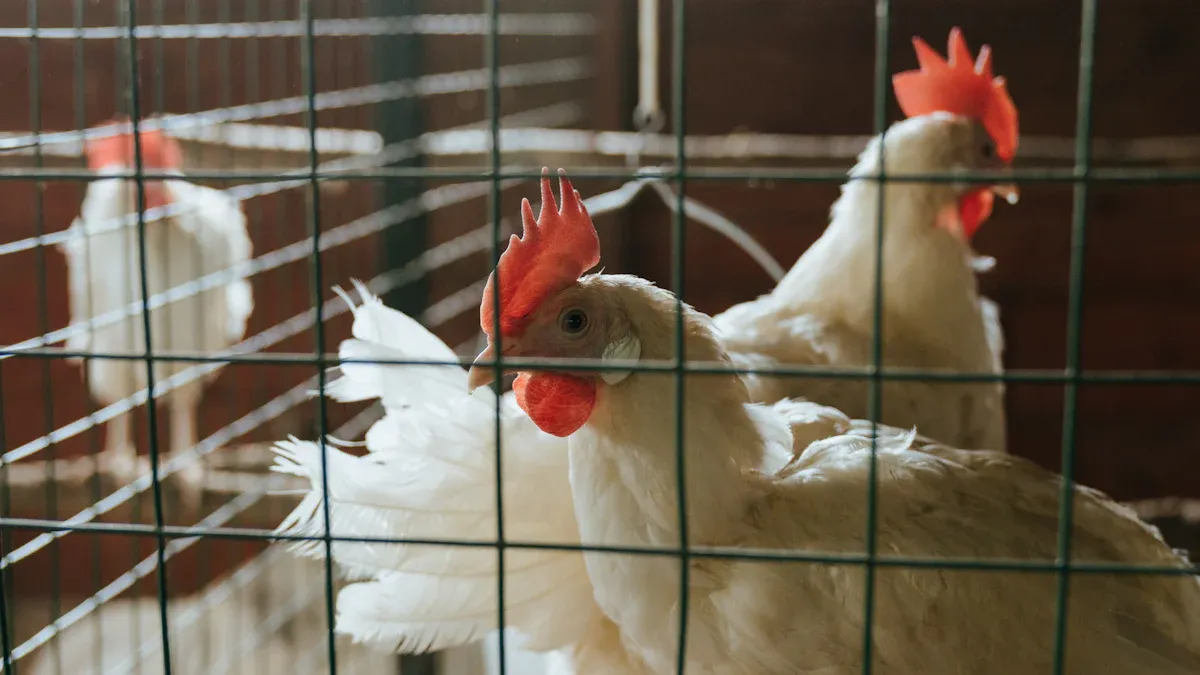
You must start by looking at your farm and deciding how many chickens you want to raise. Your farm size will guide your choices. If you have a small farm, you can use simple systems. Large farms need advanced systems to handle more birds. You should count your chickens and check how much space you have. Make a list of your farm goals. Do you want to grow your farm or keep it steady? Write down how many eggs you want to produce each week. This helps you pick the right cage system for your farm.
Tip: Use a table to track your farm’s chicken numbers and egg targets. This makes planning easier.
Farm Size | Chickens | Weekly Egg Target |
|---|---|---|
Small | 500 | 3,000 |
Medium | 2,000 | 12,000 |
Large | 10,000 | 60,000 |
You must know the rules for your farm. South Africa will update poultry laws in 2026. These laws will focus on animal welfare and biosecurity. Your farm must follow these rules to avoid fines. You need to check if your cage system meets the new standards. Look for systems that give chickens enough space and good air flow. Your farm must also keep waste under control. You should read the latest farm regulations and ask your supplier about compliance.
Your farm must match its system to what buyers want. South Africa’s market is changing fast. People want more eggs and chicken meat. Many farms now use multi-layer cage systems to boost production. Population growth and new eating habits push farms to use fully automated systems. These systems help your farm work faster and save money. Buyers also care about animal welfare and sustainability. Your farm should pick a cage system that keeps chickens healthy and meets these values. If you match your farm system to market demand, you can sell more eggs and grow your farm.
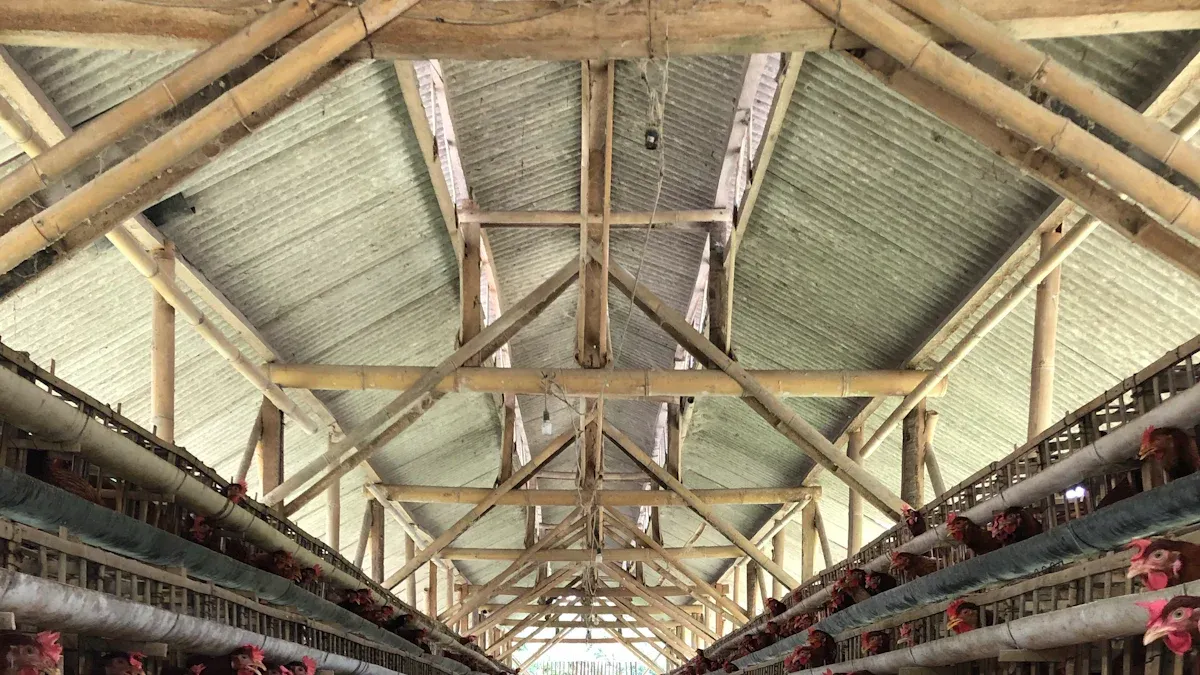
You have two main cage choices for your chickens. Battery cages are simple and hold many chickens close together. Enriched colony cages give chickens more space and things like perches. These choices can change how well your farm works and how many eggs you get.
Here is a table to help you compare the two systems:
System Type | Primary Energy Use | Global Warming Potential | Egg Production | Welfare Features |
|---|---|---|---|---|
Battery Cage | Baseline | Baseline | High | Basic |
Enriched Colony Cage | 8% lower | 3% lower | High | Better (perches, space) |
Enriched colony cages use less energy and are better for the planet. They also help chickens live better lives. Both cage types can give you lots of eggs. But enriched colony cages help you follow new animal care rules.
The kind of material your cage uses is important. Q235 steel cages last longer and stay cleaner than other steel. They do not rust as much and need less cleaning. Farms with Q235 steel cages lose fewer chickens and get more eggs. Good airflow is also very important. Cages with good ventilation keep air fresh and stop sickness. You should pick cages with smooth parts and strong airflow.
You can make your farm work better by planning the layout. H-type layer chicken cage systems save space and help control temperature. Farms with good layouts can get up to 8% more eggs each day. Each chicken should have at least 450 cm² of space. Automatic manure and egg collection systems make jobs easier and keep things clean. Pick systems that fit your farm and help you reach your goals.
Smart systems can help your farm do more work. They feed chickens, collect eggs, and clean up waste. These features save you time and hard work. Automatic feeding gives each chicken the right amount of food. Conveyor belts move eggs gently, so fewer eggs break. Automatic manure cleaning keeps cages clean and healthy. Using automation can make your farm 30-50% more efficient. You will get more eggs and work less.
Tip: Farms with self-cleaning systems need 60% less manual work. This means you have more time to grow your business.
IoT sensors help you watch temperature, humidity, and feed levels. AI-driven feeding and lighting give you better control. These tools help you find problems early and keep chickens healthy. Here is a table that shows how IoT features help your farm:
Feature | Benefit |
|---|---|
IoT sensors | Watch temperature and feed levels in real time |
AI-driven feeding and lighting | Better control and healthier chickens |
Self-cleaning mechanisms | Less work and cleaner cages |
Solar-powered systems give you your own energy. Many farms in South Africa lose power sometimes. Solar energy keeps your machines working, so you do not miss eggs. Solar power also lowers your electric bill and helps you store vaccines safely. This keeps chicks healthy and helps you get more eggs.
Smart cage systems help you follow animal welfare rules. Controlled environments lower stress and stop disease from spreading. Sensors let you check your chickens’ health any time. Automated cleaning keeps cages safe and clean. Climate control gives chickens a steady home all year. These features help you get better eggs and follow new rules.
Feature | Benefit |
|---|---|
Controlled environments | Less stress and less disease |
Health monitoring | Find sickness early |
Automated cleaning | Cleaner cages and better biosecurity |
Climate control | Steady living conditions |
Improved egg collection | Fewer broken or dirty eggs |
Smart features make your farm safer, cleaner, and help you get more eggs.
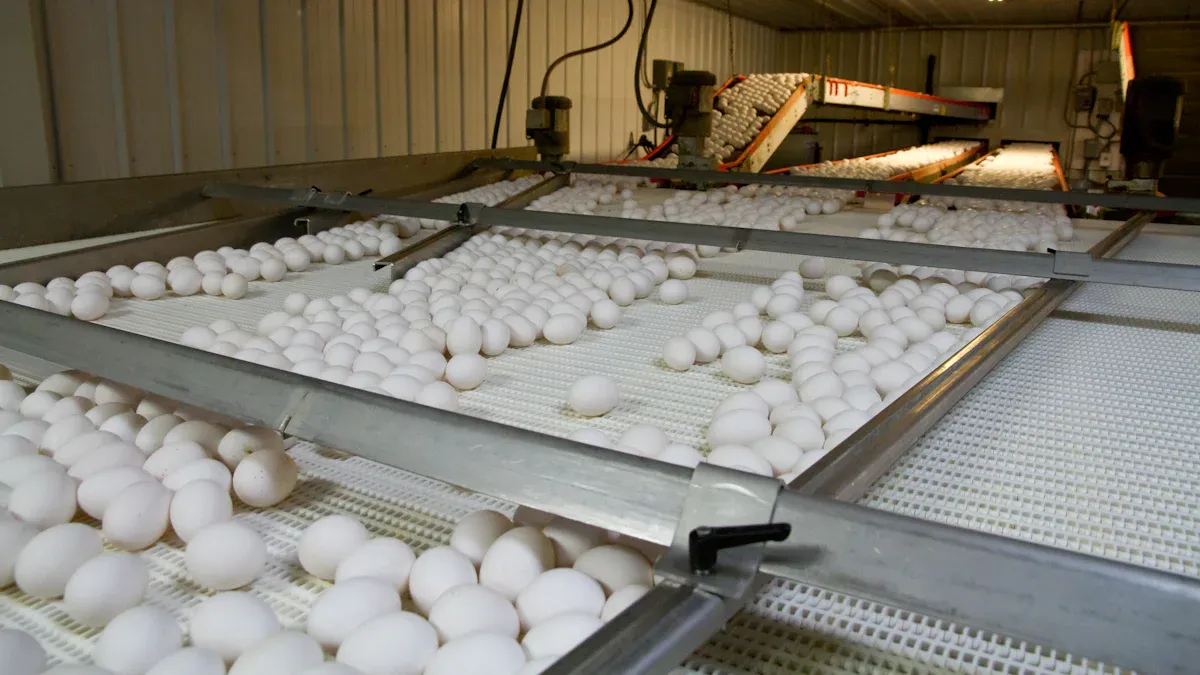
When you buy an automatic layer chicken cage system, you pay for different things. The main costs are hardware, software, and maintenance. Hardware means the metal cages, feeding machines, water systems, and egg collection belts. Software lets you control the system and see chicken data. Maintenance keeps everything working well.
Component Type | Description |
|---|---|
Hardware | Metal frameworks, automated feeding systems, water supply units, and egg collection mechanisms. |
Software | Platforms that connect hardware and give you data and control. |
Maintenance Costs | Money you spend to keep the system safe and working. |
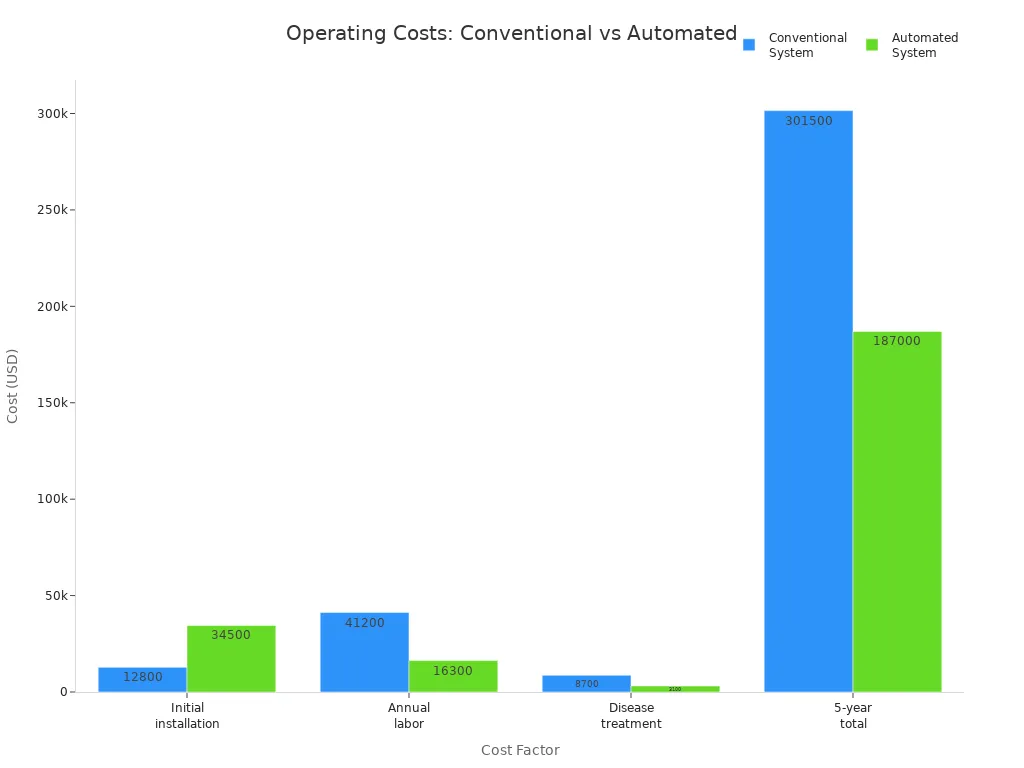
Automated systems cost more at first than manual ones. For example, a manual system might cost $12,800 to set up. An automated system can cost $34,500. You pay more at the start, but you save money later.
You pay money each month to run your farm. These costs are for feed, workers, and repairs. Automated systems help you save on labor and disease costs. You need fewer workers, and chickens stay healthier.
Cost Factor | Conventional System | Automated System |
|---|---|---|
Initial installation | $12,800 | $34,500 |
Annual labor | $41,200 | $16,300 |
Disease treatment | $8,700 | $3,100 |
5-year total | $301,500 | $187,000 |
Automated systems also help you save on electricity. Many South African farmers cut power bills by half. Labor savings are big because you need fewer workers. You can use your extra money for other farm needs.
Note: Feeding 20,000 chickens each month can cost $20,000 to $40,000. Labor can cost $2,000 to $5,000 per month, even with automation. Maintenance can add $500 to $1,000 each month.
You want to know how long it takes to get your money back. ROI stands for "return on investment." You can use a simple formula:
Component | Value |
|---|---|
Initial Investment | $20,000 |
Annual Cost Savings and Revenue | $8,000 |
ROI Period Calculation | $20,000 ÷ $8,000 = 2.5 years |
Typical Recovery Period | 2 to 4 years |
Some farms in South Africa get ROI in just 1.7 years. You get your money back faster because you save on labor and energy. Automated systems help you get more eggs and lose fewer chickens. This means you make more money each year.
Tip: Pick roi-optimized systems to get the best return over time.
You can see the change when you look at traditional farms and fully automated ones. Automated systems need fewer workers. They give you more eggs and break fewer eggs. Air is cleaner, and chickens get sick less. You get your money back faster.
Category | Traditional Farm | Fully Automated System |
|---|---|---|
Labor Requirement | 40–60 workers | 10–15 workers |
Laying Rate | 82–85% | 92–95% |
Egg Breakage | 6–8% | ≤1.5% |
Air Quality | Poor | Clean and stable |
Disease Incidence | High | Significantly reduced |
Return on Investment | 4–5 years | 2–3 years |
Automated systems help you make more money and keep it. You spend less on workers and repairs. You get more eggs to sell. This helps your farm grow and stay strong for a long time.
Callout: Automated layer chicken cage systems give you roi and help you reach your farm goals faster.
You must pick a supplier you can trust. A good supplier helps you avoid big mistakes. Use this checklist to help you choose:
Pick suppliers who know about automated layer cage systems. They will know what your farm needs.
Check if they have certifications like SABS Approval or ISO 9001. These show the supplier is safe and makes good products.
Ask what materials they use. Strong steel and good coatings last longer and keep chickens safe.
Ask for a sample before buying a lot. This lets you check the quality yourself.
Make sure you know when your order will arrive. Ask what happens if it is late.
The warranty should cover parts, labor, and returns.
Ask for a quote that lists all costs, including shipping.
See how fast the supplier answers your questions. Fast replies mean they are reliable.
Read all documents to check product names and details match.
Add a rule for quality checks by a third party in your contract.
Set packaging rules so cages do not get damaged during shipping.
Write down who to contact after you buy and how to fix problems.
Tip: Using a checklist helps you avoid mistakes and keeps your money safe.
You can buy local or imported cage systems. Local suppliers answer faster and are easier to talk to. They also know South African rules better. Imported systems may have more features or lower prices. But shipping takes longer and can cost more. Always compare quality, price, and support before you choose.
A good warranty and support help you worry less. Many South African suppliers give a 3-year warranty and support for life. This means you get help if something breaks or needs fixing.
Warranty Duration | After-Sales Support |
|---|---|
3 years | Lifetime after-sales support |
Note: Always ask what the warranty covers. Find out how repairs and returns work before you buy.
To get the most money back from your automatic layer chicken cage system in 2026, do these things:
Clean cages and tools on a regular plan.
Check the temperature and humidity to keep hens happy.
Give balanced feed and fresh water every day.
Follow steps to stop sickness and keep germs away.
Teach your workers how to use the system and care for animals.
Watch for new technology and look at your farm data often.
Automation Feature | Benefit |
|---|---|
Robotic cleaners | Less money spent on workers |
Sensor-based monitoring | More eggs and healthier hens |
IoT integration | Better use of feed |
Use checklists and real ROI stories to help you choose. Look at your farm now and think about upgrades to make it stronger and earn more money.
You use an automatic layer chicken cage system to manage your poultry. This system feeds, waters, and collects eggs for you. It helps you save time and money. Many poultry farmers in South Africa choose this system for better results.
Automation makes your poultry work easier. You do not need to feed chickens by hand. Machines clean cages and collect eggs. Your poultry stays healthy. You get more eggs and spend less money. Many poultry farms see higher profits with automation.
Yes, automatic systems keep your poultry safe. These systems control temperature and air. They give clean water and food. Your poultry gets less stress. You see fewer diseases. Many poultry farmers trust these systems for animal welfare.
You look at your poultry farm size and goals. You check how many poultry you have. You ask suppliers about features. You compare prices and support. You pick a system that fits your poultry needs and follows South African rules.
You get more eggs from your poultry. You save money on workers. Your poultry stays healthy. You use less energy. You follow new laws. Many poultry farmers grow their business with automatic systems. You see better results for your poultry every year.
Tip: Ask other poultry farmers about their experience with automatic systems before you buy.


