
English ![]()

+86-15030729981
www.zeushebei.com
www.zeushebei.com
Economic Development Zone, Cang City, Hebei Province, China.

Views: 21 Author: Site Editor Publish Time: 2025-12-19 Origin: Site

As the global population continues to grow, the demand for food, particularly protein-rich poultry products, is escalating. Traditional farming methods are increasingly struggling to meet this demand, especially as the available land for agricultural expansion becomes more limited. This is where stacked cage systems come into play. By utilizing vertical farming methods, these systems allow poultry farms to significantly increase their production capacity without the need for additional land. In this article, we’ll explore how stacked cage equipment can help farmers maximize their farm’s capacity, improve efficiency, and ultimately boost profitability. We’ll also discuss why vertical farming is a game-changer for modern agriculture and how it supports sustainable practices in an ever-growing industry.
Stacked cage systems are a type of poultry housing designed to maximize space by vertically stacking cages in tiers. These systems house poultry in a confined, multi-tiered arrangement that optimizes the use of available space. Each tier typically includes automated systems for feeding, watering, and waste management, making it easier for farmers to manage larger flocks while reducing labor and operational costs.
The cages themselves are typically made from durable, easy-to-clean materials and are often designed to ensure proper airflow and temperature control, which are crucial for the health and comfort of the birds.
Stacked cage systems operate by vertically stacking individual cages, usually in multiple tiers, that house broilers, layers, or other poultry. These cages are designed to provide birds with enough space while maintaining optimal living conditions. Automated feeding systems distribute feed to the birds in each cage, while watering systems ensure that they have access to fresh water at all times. Waste management systems remove manure from the cages to maintain hygiene and reduce the risk of disease.
By utilizing vertical space, farmers can increase their flock sizes without expanding the physical footprint of their farm. This allows farms to increase their productivity and operational efficiency without the need for more land or extensive infrastructure investments.
The primary advantage of stacked cage systems is their ability to increase farm capacity in a highly efficient manner. By maximizing the use of vertical space, these systems allow poultry farmers to house more birds in the same physical area, leading to increased productivity and profitability.
Traditionally, poultry farming relies on spreading birds out across a large horizontal area, which requires significant land and infrastructure. However, with stacked cages, farmers can house significantly more birds in the same physical footprint. For example, by stacking cages vertically, a farm can accommodate several times the number of birds that could be housed in a conventional floor system. This allows farmers to increase their flock size without requiring additional land or building space, which can be particularly beneficial for operations located in areas where land is scarce or expensive.
In addition to maximizing space, stacked cage systems also contribute to more efficient resource use. These systems are designed to optimize feeding, watering, and waste management processes, ensuring that resources are used as effectively as possible. The automated systems reduce the need for manual labor, allowing farm workers to focus on more high-level tasks, such as monitoring bird health and ensuring the overall efficiency of the operation.
The improved use of resources—both in terms of space and materials—leads to a more sustainable farming operation, where productivity can be increased without a proportional increase in resource consumption.
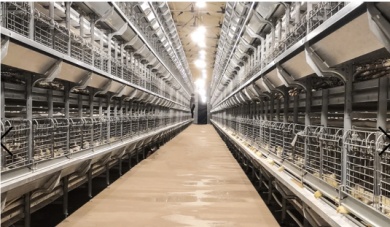
By increasing the number of birds that can be housed in a smaller space, stacked cage systems directly boost productivity. These systems allow farms to scale their operations without significant capital investments in land or infrastructure. This increased capacity translates to higher output, whether it’s more eggs, more broilers, or both. As production capacity increases, so too does the potential for revenue, leading to improved profitability for farmers.
One of the key factors influencing poultry production is maintaining optimal environmental conditions. Stacked cage systems are designed to provide consistent temperature control, proper ventilation, and efficient waste management. Because the cages are stacked in tiers, the system can ensure that each bird is housed in an ideal environment, promoting faster growth and healthier birds. Proper ventilation and temperature control are essential for preventing heat stress, reducing the risk of disease, and promoting the overall well-being of the flock.
Labor costs in poultry farming can be a significant burden, especially in traditional systems that require constant manual intervention. With stacked cage systems, many of the labor-intensive tasks are automated. The automated feeding and watering systems ensure that birds have constant access to nutrition and hydration, while automated waste removal systems reduce the need for frequent cleaning. This reduces the overall labor requirements for poultry farms, allowing farmers to focus on higher-level tasks and reducing the need for large, dedicated workforces.
In an era where sustainability is a growing concern, stacked cage systems offer a range of environmental benefits that make them an attractive option for poultry farmers looking to minimize their environmental impact.
As mentioned, stacked cage systems allow farms to house more birds in a smaller area. This helps conserve valuable land and reduces the environmental impact of poultry farming. By increasing the production capacity without expanding the physical footprint of the farm, these systems reduce the need for additional land clearing, which in turn helps preserve natural habitats and biodiversity.
One of the key benefits of stacked cage systems is their ability to efficiently manage waste. The automated waste management systems in these systems remove manure from the cages, keeping the environment cleaner and more hygienic. By managing waste more effectively, the system reduces the risk of disease and minimizes the environmental impact of manure, which can be harmful if left untreated.
In addition, the manure collected can be repurposed as fertilizer, providing a valuable byproduct that can be used on the farm or sold to other agricultural operations. This creates a more sustainable farming operation, where waste is minimized, and resources are reused.
Although the focus of stacked cage systems is often on increasing farm capacity and improving efficiency, it is important to note that these systems can also benefit the animals themselves.
The design of stacked cage systems ensures that birds have access to optimal conditions for growth. The ability to control temperature, ventilation, and humidity helps to keep the birds comfortable and healthy. By separating birds into individual cages, the risk of overcrowding is minimized, which reduces stress and the spread of disease. This leads to healthier birds, lower mortality rates, and improved production rates.
The separation of birds in stacked cages ensures that they have more personal space compared to traditional floor systems. The controlled environment and reduced exposure to other birds help minimize stress and aggression, which can lead to injuries in more crowded or unstructured environments. By providing a more stable and predictable environment, stacked cage systems improve the overall welfare of the birds.
The benefits of stacked cage systems for poultry farms are clear: increased productivity, improved efficiency, lower labor costs, and environmental sustainability. These systems enable farmers to scale their operations, reduce costs, and improve the overall quality of their poultry products.
At Hebei Zeus Machinery Manufacturing Co., Ltd., we are committed to providing high-quality stacked cage systems that help poultry farmers achieve their operational goals. Our equipment is designed to maximize farm capacity while maintaining the highest standards of animal welfare and environmental responsibility. Whether you are a small family-owned farm or a large commercial poultry operation, our stacked cage systems can provide the efficiency, scalability, and sustainability your business needs.
If you are looking to improve the productivity and sustainability of your poultry farm, we invite you to learn more about our stacked cage systems. Our team of experts is ready to provide tailored solutions to meet your specific needs. Please feel free to contact us for more information on how our systems can help take your poultry farming operation to the next level.
1. How do stacked cage systems increase farm capacity?
Stacked cage systems maximize vertical space by stacking cages in tiers, allowing farmers to house more birds in the same physical footprint. This increases farm capacity without the need for additional land.
2. What are the environmental benefits of stacked cage systems?
These systems reduce the need for additional land, helping preserve natural habitats. They also offer efficient waste management, reducing the environmental impact of poultry farming.
3. How do stacked cage systems improve poultry health?
By providing a controlled environment with optimal temperature, ventilation, and reduced overcrowding, stacked cage systems promote healthier birds, lower stress levels, and reduce the spread of disease.
4. Can stacked cage systems reduce labor costs?
Yes, the automation of feeding, watering, and waste management systems reduces the need for manual labor, allowing farm workers to focus on higher-level tasks and reducing overall labor costs.


