
English ![]()

+86-15030729981
www.zeushebei.com
www.zeushebei.com
Economic Development Zone, Cang City, Hebei Province, China.

Views: 36 Author: Site Editor Publish Time: 2025-12-16 Origin: Site

In the world of modern poultry farming, space optimization is more important than ever. As urbanization increases and available land decreases, poultry farms must adopt innovative systems that maximize efficiency while maintaining animal welfare. One of the most effective solutions for optimizing space is the use of stacked cage equipment. This technology not only improves space utilization but also enhances productivity, reduces operational costs, and ensures that poultry farming remains sustainable and efficient.
In this article, we’ll explore the advantages of stacked cage systems, how they work, and why they should be an essential part of your poultry farming operation. From increasing the number of birds per square meter to improving overall management and care, stacked cage equipment is transforming the poultry industry.
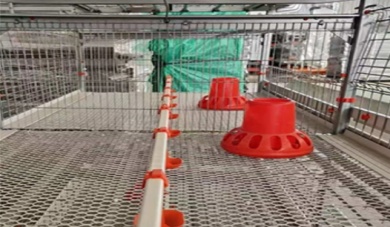
Stacked cage equipment refers to a poultry housing system where multiple tiers of cages are arranged vertically, allowing for a more efficient use of space. This system is commonly used in both broiler and layer poultry farming, providing a compact, organized way to house large numbers of birds within a limited area. The cages themselves are typically made of wire mesh or durable metal materials, and they are designed to keep birds in controlled, individual compartments.
Stacked cage systems can vary in design, with some featuring automated feeding, watering, and waste management systems. These cages are often stacked in rows, either within a single building or across multiple levels, enabling farmers to house many birds in a small space without compromising on their welfare.
The use of stacked cage systems offers numerous advantages for poultry farmers. These systems not only optimize space but also improve the overall management and efficiency of the farming operation. Here are some of the key benefits:
One of the most significant advantages of stacked cage equipment is its ability to maximize space. Traditional floor systems for poultry farming typically spread birds over a large area, meaning the available space is not used as efficiently as possible. In these systems, birds have more room to move but may suffer from overcrowding, limited access to resources, and difficulty in managing waste. In contrast, stacked cage systems utilize vertical space, allowing farmers to house a higher number of birds within the same floor area.
By stacking cages vertically, farmers can significantly increase production without the need for additional land or infrastructure. This approach not only optimizes space but also allows poultry farms to accommodate a larger number of birds, leading to higher overall production without compromising the quality of care. In areas where land is limited—such as in urban or semi-urban farms, where available real estate is scarce—this space-saving solution becomes even more valuable. Stacked cages make it possible for farmers to scale up their operations without the burden of expanding their land base.
Another advantage of vertical stacking is that it minimizes the need for long, expansive barns or outdoor spaces, freeing up more land for other uses or reducing operational costs. In commercial poultry farming, especially in large-scale operations, this space efficiency is a game-changer, leading to a more streamlined, organized, and productive system. The ability to house more birds in a smaller area ensures that farms can increase their poultry output and profitability while keeping infrastructure needs to a minimum.
While the primary function of stacked cage systems is space optimization, they also significantly improve bird health and welfare. In traditional floor systems, overcrowding is a common issue, especially in high-density farming operations. When birds are kept in crowded conditions, it leads to increased stress, aggression, and the spread of diseases. Birds can become territorial, leading to fights, feather pecking, and even physical injury. These conditions not only slow down growth rates but also increase the risk of infections, reducing the overall productivity of the farm.
In contrast, stacked cage systems are designed to provide controlled environments where overcrowding is minimized, and each bird has enough space to move, eat, and rest. By housing birds in individual cages or smaller groups, stacked cage systems prevent aggression and injury among the flock, which ultimately promotes healthier birds. Each bird is given its own designated area, ensuring that it has access to the food, water, and air it needs to thrive.
These cages also reduce the physical contact between birds, which reduces the chances of disease transmission. By separating the birds, stacked cages help control the spread of diseases, especially in high-density environments where infections can spread quickly in traditional systems. The controlled environment also reduces stressors that could impair the birds' immune systems and growth potential.
One of the challenges of poultry farming is disease control. In traditional systems, where birds are kept on the floor or in open environments, diseases can spread rapidly due to close contact between birds and contaminated bedding or litter. Stacked cage systems help mitigate this issue by keeping the birds in individual compartments, where they have less physical contact with one another.
Additionally, stacked cage systems often feature advanced waste management solutions, such as automatic waste collection and disposal systems, which help keep the cages clean and free from harmful bacteria. This reduces the risk of infections and diseases, leading to healthier birds and fewer veterinary costs.
The ease of cleaning and disinfecting stacked cages is another major advantage. Unlike floor systems, where cleaning can be labor-intensive and time-consuming, stacked cages are designed to be easy to maintain, with smooth surfaces that prevent the buildup of dirt and bacteria. Regular cleaning and sanitizing help ensure a sanitary environment for the birds, further promoting their health and growth.
By allowing for more birds to be housed in a smaller area, stacked cage systems directly contribute to increased productivity. The ability to house a higher number of birds in the same space means that farmers can scale their operations without the need for additional land, infrastructure, or labor. This leads to higher output and better profitability.
Moreover, the controlled environment in stacked cages ensures that birds grow faster and more efficiently. With optimized nutrition, temperature regulation, and ventilation, broilers in stacked cages reach their target weight more quickly, while layers tend to produce more eggs in a shorter amount of time. The result is a more efficient farming operation that delivers consistent output and maximizes profits.
Stacked cage systems often come with automation features that reduce the labor required for feeding, watering, and cleaning. Automated feeding lines and water delivery systems ensure that all birds receive the appropriate amount of food and water with minimal manual intervention. Similarly, waste removal systems automatically collect and dispose of waste, reducing the amount of time and effort spent on cleaning.
The automation of these processes not only improves the efficiency of the farming operation but also helps reduce labor costs. With less manual labor required, farmers can focus on other aspects of their operation, such as monitoring bird health, managing inventory, and ensuring the overall well-being of their flock.
As environmental concerns become more prominent in the agricultural industry, many poultry farms are looking for ways to reduce their environmental impact. Stacked cage systems are more resource-efficient, as they allow for better waste management and water use. Automated systems ensure that resources such as feed and water are distributed efficiently, reducing waste and conserving valuable resources.
Furthermore, the compact design of stacked cage systems reduces the farm's overall land footprint, which helps minimize the environmental impact of large-scale poultry farming. By optimizing space and resources, farmers can run more sustainable operations that align with modern environmental standards.
Stacked cage systems represent a significant advancement in poultry farming, offering space optimization, improved bird welfare, better disease control, and increased productivity. These systems are ideal for commercial poultry farms looking to scale their operations while ensuring that the health and well-being of their birds remain a top priority. With the ability to house more birds in less space, farmers can increase output, reduce labor costs, and run more efficient, profitable operations.
At Hebei Zeus Machinery Manufacturing Co., Ltd., we specialize in providing top-quality stacked cage equipment that helps poultry farmers optimize their space, improve bird health, and maximize productivity. Our equipment is designed with advanced automation, superior waste management, and ease of maintenance in mind, ensuring that your farming operation is both efficient and sustainable.
If you’re looking to improve your poultry farm's efficiency and productivity with state-of-the-art stacked cage systems, we invite you to contact us at Hebei Zeus Machinery Manufacturing Co., Ltd. Our team of experts is here to help you find the right solution for your farm and ensure that your operation runs smoothly and profitably.
Feel free to reach out to us for more information or to discuss your specific poultry farming needs. We look forward to helping you take your operation to the next level.


