
English ![]()

+86-15030729981
www.zeushebei.com
www.zeushebei.com
Economic Development Zone, Cang City, Hebei Province, China.

Views: 41 Author: Site Editor Publish Time: 2025-12-10 Origin: Site

In the poultry industry, ensuring the health and survival of chicks during their early stages of life is critical to the success of any farm. The transition from hatch to the brooding stage is one of the most vulnerable periods for chicks, as they are highly susceptible to temperature fluctuations, stress, and diseases. Brooding cage equipment plays an essential role in maintaining optimal conditions during this crucial period, promoting healthy growth, and improving survival rates.
Temperature control is one of the most critical factors influencing chick survival and development. Immediately after hatching, chicks are unable to regulate their body temperature, making them highly vulnerable to both cold and heat stress. Since chicks cannot generate enough heat on their own, it’s essential to provide a controlled, warm environment to support their early development. This is where brooding cage equipment plays a vital role.
Brooding cage systems are designed to maintain a stable and consistent temperature within the brooding environment, closely mimicking the warmth that a mother hen would provide naturally. Modern brooding systems are equipped with advanced heating mechanisms, such as infrared lamps, heaters, and underfloor heating systems, all of which can be precisely controlled to maintain the ideal conditions for chicks. These systems allow farmers to monitor and adjust the temperature with ease, ensuring that it remains within the optimal range for chick growth and health.
Typically, the optimal temperature for chicks during the first few days of life ranges from 32°C to 35°C (89.6°F to 95°F). This is essential to mimic the warmth of a hen’s brood patch and prevent chicks from becoming cold. If the temperature drops too low, chicks may experience hypothermia, which can result in stunted growth or even death. On the other hand, if the temperature is too high, chicks may suffer from heat stress, which can lead to dehydration, reduced feed intake, and poor overall health.
As chicks grow and develop, their ability to regulate body temperature improves, and the brooding system should gradually reduce the heat to help them acclimate to the ambient temperature of their environment. Properly managed temperature reduction helps ensure that chicks experience minimal stress during this adjustment period. Maintaining a consistent, controlled environment is key to keeping chicks healthy, enabling them to thrive, grow faster, and reach their full potential.
The ability to precisely control temperature through modern brooding systems also helps reduce the incidence of cold-related diseases, such as hypothermia, and heat-related illnesses, such as heat stroke. Both of these conditions can drastically reduce chick survival rates if not properly managed. By ensuring that temperature fluctuations are minimized and consistently within the ideal range, brooding cages reduce the likelihood of these potentially fatal conditions.
Proper nutrition is fundamental for chick health, especially in the early stages of life when rapid growth and development are essential. Chicks require consistent access to fresh feed and water to ensure they receive the necessary nutrients to grow at a healthy rate. Without efficient and timely feeding, chicks may struggle to develop, leading to weakened immune systems, stunted growth, and reduced survival rates.
Brooding cage equipment addresses these needs by incorporating efficient feeding systems designed to deliver food and water to chicks in a controlled and hygienic manner. Modern brooding systems typically feature automatic feeders and waterers, which ensure that chicks have constant access to fresh food and clean water throughout the day. These systems are especially beneficial because they automate the feeding process, reducing the need for manual intervention and ensuring that feed is distributed consistently.
One of the main advantages of automated feeding systems is that they help minimize feed waste. In traditional manual feeding methods, chicks can easily spill or waste food, leading to increased costs and inefficient resource usage. Automatic feeders in brooding cages are designed to prevent overfeeding, and they deliver the exact amount of feed needed at scheduled times, helping optimize feed usage. Additionally, the feeders are often designed to be highly efficient, ensuring that every bit of food is used by the chicks and not wasted.
Stress is a significant factor that can negatively impact chick health. In the wild, chicks benefit from the comfort of a mother hen and a secure environment. In modern poultry farming, brooding cage systems replicate these conditions by providing chicks with a controlled and comfortable environment that promotes well-being.
Brooding cage equipment includes features that help reduce stress, such as adjustable ventilation systems and smooth cage designs that prevent injury. Ventilation is essential to remove excess moisture and gases, which can contribute to poor air quality and respiratory issues. The cages are designed with adjustable air intake and exhaust systems, ensuring a constant flow of fresh air while maintaining the appropriate humidity levels. Proper ventilation prevents the accumulation of harmful gases like ammonia, which can cause respiratory problems and stress in chicks.
The design of the cages also contributes to minimizing stress by providing enough space for the chicks to move around freely. Overcrowded conditions can lead to physical injuries and behavioral issues, which can hinder growth and increase the risk of disease. With proper spacing and environmental control, brooding cages provide chicks with the comfort they need to grow healthy and strong.
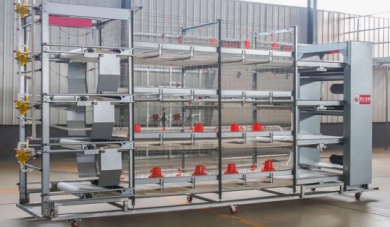
Maintaining a clean and hygienic environment is critical to preventing the spread of diseases among chicks. Brooding cage equipment is designed with hygiene in mind, with features such as easy-to-clean surfaces, drainage systems, and antimicrobial materials. These features help to minimize the risk of infections, which can significantly reduce chick survival rates.
Brooding cages are often equipped with waste management systems that automatically remove waste products from the cages, ensuring that the environment remains dry and clean. Wet litter and manure are breeding grounds for bacteria, fungi, and parasites, all of which can cause illness in chicks. By keeping the environment dry and sanitary, brooding cage equipment helps reduce the chances of disease outbreaks and promotes better overall health.
Additionally, some modern brooding systems have built-in air filtration systems that help filter out harmful pathogens and contaminants from the air. This further reduces the likelihood of respiratory illnesses, which can be a significant issue in poultry farming.
One of the standout features of modern brooding cage equipment is the integration of advanced monitoring and control systems. These systems allow poultry farmers to track and adjust environmental conditions in real time. For example, sensors can monitor temperature, humidity, feed levels, and even chick activity. This data is transmitted to a central control system, where adjustments can be made to maintain the ideal conditions.
Having real-time data on chick behavior and health allows farmers to detect problems early, such as a drop in temperature, irregular feed intake, or signs of stress. Early intervention can make all the difference in preventing health issues from escalating, ultimately improving chick survival rates. Additionally, automation allows farmers to focus on other aspects of farm management, knowing that the environmental conditions for the chicks are being closely monitored and maintained.
Investing in high-quality brooding cage equipment might seem expensive upfront, but the benefits far outweigh the costs in the long run. By improving chick health and survival rates, brooding cages reduce the need for costly interventions, such as veterinary care, antibiotics, and medication. This makes brooding cage systems a cost-effective solution for poultry farmers looking to maximize their return on investment.
Additionally, the automation and efficiency provided by brooding cage equipment lead to lower labor costs. Automated feeding, watering, and cleaning systems require less manual labor, allowing farm operators to reduce staffing expenses and focus on other essential tasks. The equipment’s durability and ease of maintenance further contribute to long-term cost savings, making brooding cages an excellent investment for poultry farms of all sizes.
Moreover, modern brooding cage systems are designed with sustainability in mind. Many of these systems use energy-efficient components and materials, which contribute to reducing the environmental impact of poultry farming. By optimizing the use of resources and minimizing waste, brooding cages help farmers align with sustainable farming practices while boosting their bottom line.
Brooding cage equipment plays a pivotal role in maximizing chick health and survival. From maintaining optimal temperature conditions to providing efficient feeding systems, promoting comfort, and preventing diseases, brooding cages help create an environment where chicks can thrive during their most vulnerable stage of life. The use of advanced technology and automation ensures that farmers can monitor and control conditions effectively, leading to healthier chicks and improved farm productivity.
At Hebei Zeus Machinery Manufacturing Co., Ltd., we understand the importance of providing high-quality brooding cage equipment that supports the success of poultry farms. Our products are designed to meet the demands of modern poultry farming by offering efficiency, durability, and sustainability. We encourage you to explore our range of brooding cage systems and learn how they can enhance the health and survival of your chicks. Contact us today to find out more about our innovative solutions for poultry farming.


